
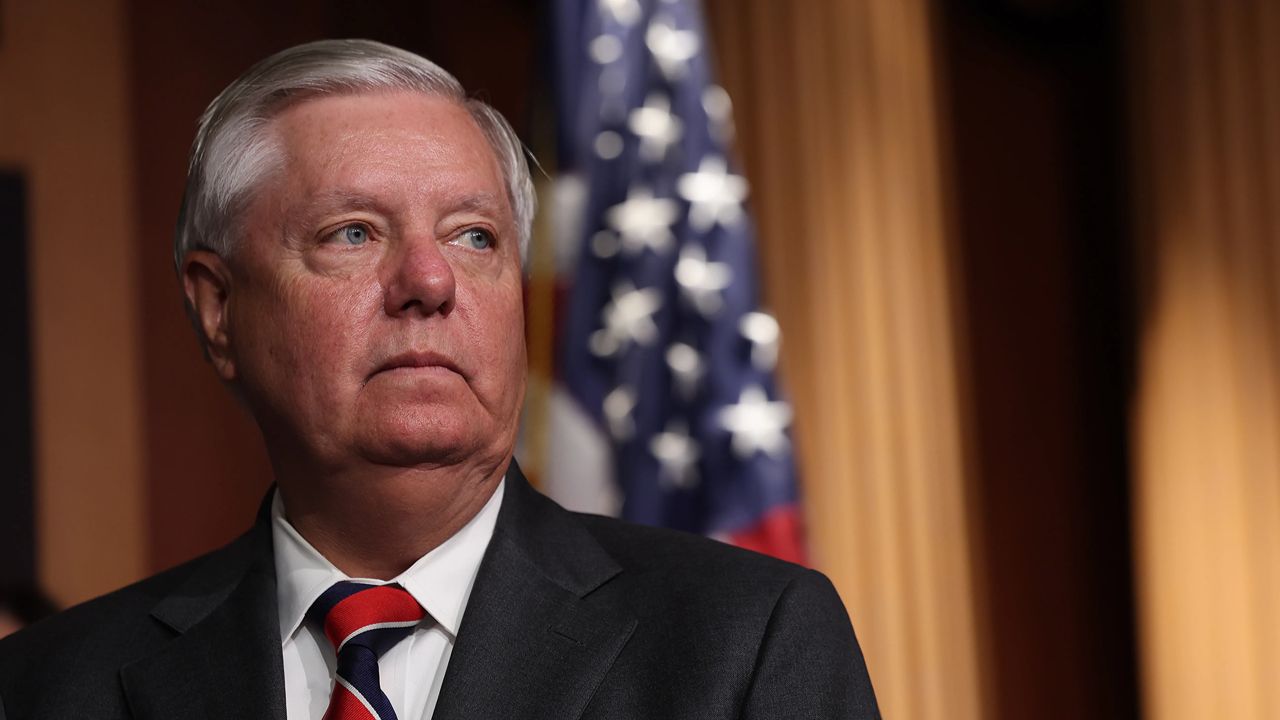
For more than two decades, Lindsey Graham was one of the most recognizable — and, at times, contradictory — figures in American politics. A Republican senator from South Carolina who served from 2003 until his sudden death in July 2026 at age 71, Graham’s political journey defied easy categorization. He was simultaneously a conservative stalwart on domestic issues and a neoconservative interventionist on foreign policy; a fierce critic of Donald Trump who later became one of his closest allies; and a figure who could work across the aisle while also embracing the MAGA movement’s most powerful figure. To understand Graham is to understand the modern Republican Party’s tensions — between establishment and populist, isolationist and interventionist, traditional conservatism and Trumpism.
The question of whether Lindsey Graham was a Republican or Democrat is straightforward: he was unquestionably a Republican. First elected to the U.S. House in 1994 as the first Republican from South Carolina’s Third Congressional District since 1877, he won his Senate seat in 2002 and was running for a fifth term at the time of his death. His voting record consistently reflected conservative priorities: he was staunchly pro-gun, anti-abortion, and opposed to same-sex marriage.
The American Conservative Union honored him with a 92 rating for his conservative voting record. Yet Graham was never a pure ideologue — he voted to confirm Supreme Court Justice Sonia Sotomayor, supported liberal judicial nominees, and earned a reputation as a dealmaker willing to compromise. This pragmatism, combined with his hawkish foreign policy, often put him at odds with the more populist, isolationist wing of his own party.
From Trump’s Sharpest Critic to His Staunchest Ally
Perhaps the most defining feature of Lindsey Graham’s political career was his extraordinary transformation regarding Donald Trump. During the 2016 Republican presidential primary, Graham was among Trump’s most outspoken critics. He strongly criticized Trump’s rhetoric and fitness for office, warning that nominating him would lead to electoral defeat. He publicly stated: “If we nominate Trump, we will get destroyed … and we will deserve it.” Trump, in turn, dismissed Graham with sharp personal remarks, calling him an “idiot” and a “lightweight.”
Yet after Trump won the presidency, Graham’s posture shifted dramatically. By Trump’s first term, Graham had become one of his most outspoken advocates in the Senate. He rallied defense of Trump’s embattled Supreme Court nominee Brett Kavanaugh, voted against convicting Trump in the 2021 impeachment trial, and endorsed Trump early in the 2024 presidential election. The two became regular golf partners. Graham’s embrace of Trump reached its zenith in June 2026, after winning the South Carolina Republican primary with Trump’s endorsement.
In his victory speech, Graham declared: “I want to thank the big guy, God. Trump comes later. Mr. President, you’re not far behind God”. He called Trump “the gold standard in the Republican world” and “the most consequential endorsement, I think, in the history of politics”.
U.S. Senator Lindsey Graham (R-South Carolina) has died at the age of 71. pic.twitter.com/kclPG5Ufkm
— Pop Base (@PopBase) July 12, 2026
This evolution was not without its tensions. Graham briefly broke with Trump after the January 6, 2021, Capitol attack, declaring “count me out. Enough is enough”. He later disagreed with Trump’s decision to pardon about 1,500 January 6 participants. And among the MAGA grassroots, Graham remained controversial — sometimes booed at Trump rallies for his interventionist foreign policy and occasional departures from pure Trumpism. Yet Trump’s repeated endorsements and their personal friendship ultimately cemented Graham’s place within the MAGA orbit.
You Might Like: From Stellenbosch to Sundowns: Jayden Adams’ Salary and Net Worth at the Time of His Passing
Conservative or Liberal? A Complex Political Spectrum
Placing Lindsey Graham on the traditional left-right spectrum requires nuance. On domestic policy, he was solidly conservative: pro-life, pro-gun, and a defender of conservative judicial nominees. He voted against the Women’s Health Protection Act, calling it a “radical Democratic bill that would legalize abortion up to the moment of birth”. He consistently supported tax cuts and small-business interests.
On foreign policy, however, Graham was a neoconservative interventionist — a position that often placed him to the left of the populist, America First wing of his party. He was the Senate’s leading hawk on Iran, repeatedly calling for the regime’s overthrow and urging military action. He supported the Iraq war, advocated for aggressive U.S. posture toward Russia, and became one of Ukraine’s most vocal champions in Congress — visiting Kyiv ten times since Russia’s 2022 invasion. His foreign policy worldview was described by one colleague as: “Lindsey hasn’t seen a fist fight he hasn’t wanted to turn into a bombing raid”. He pushed for 500% tariffs on countries purchasing Russian oil, including India, and championed unwavering U.S. support for Israel.
This combination — conservative on culture and economics, interventionist on foreign affairs — made Graham a bridge figure in a party increasingly defined by Trump’s populist nationalism. He operated within what some described as the “neoconservative-liberal interventionist consensus” that dominated Washington after the Cold War. Yet he also adapted to the Trump era, learning to speak the language of MAGA while maintaining his core interventionist beliefs. Ultimately, Lindsey Graham was neither a pure conservative nor a liberal, neither fully MAGA nor fully establishment — he was, perhaps, the ultimate political survivor in an era of profound partisan realignment, a man whose career reflected the contradictions and complexities of the Republican Party he served for over three decades.