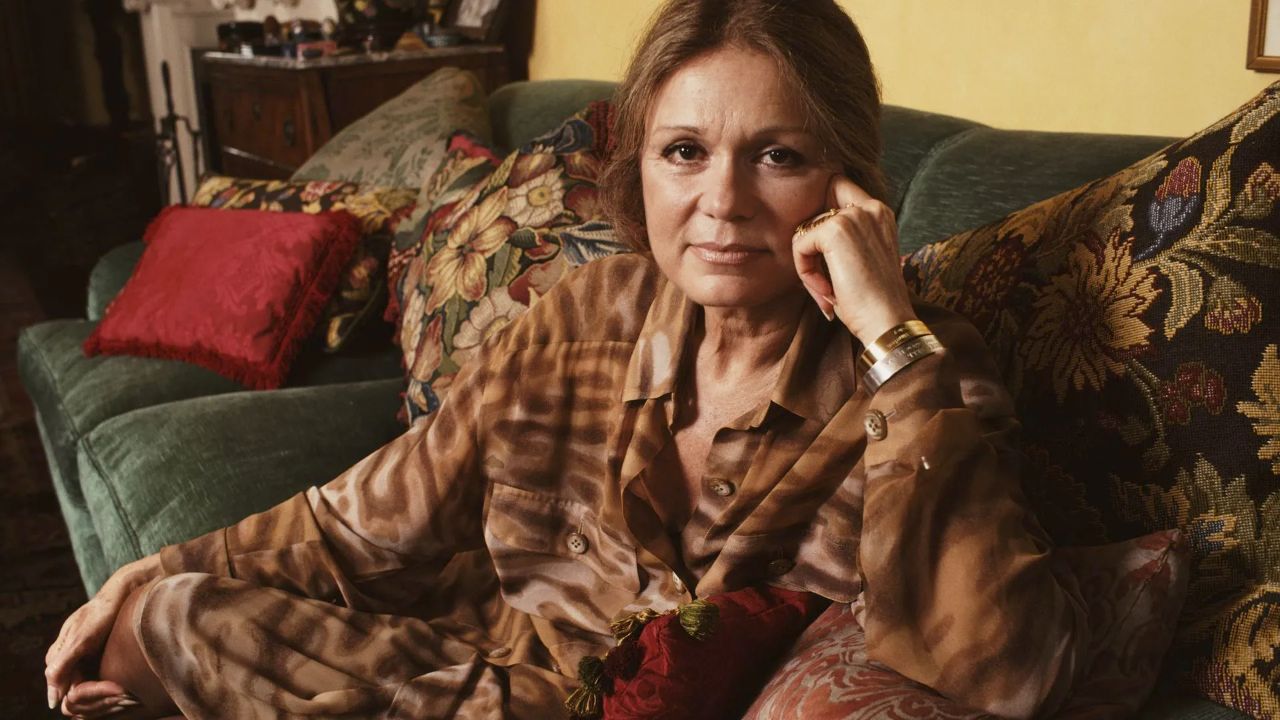
Gloria Steinem, the pioneering feminist journalist and activist who co-founded Ms. magazine and helped shape the second-wave women’s movement, died peacefully on September 2, 2026, at her home in New York City. She was 92. Surrounded by loved ones, she continued advocating for equality until the end of her long life. Born March 25, 1934, in Toledo, Ohio, Steinem spent decades as one of the most visible voices for women’s rights, reproductive freedom, and social justice.
Her religious identity was complex and never strictly conventional. The daughter of a Jewish father and a Presbyterian mother, she was baptized in a Congregational church as a child yet never identified as Christian. Instead, she often claimed Jewish identity in moments of antisemitism and found spiritual resonance in feminist reinterpretations of Jewish ritual.
Family Background and Early Influences
Gloria Steinem’s father, Leo Steinem, came from a Jewish family of German immigrant roots. Her paternal grandmother, Pauline Perlmutter Steinem, was a Reform Jewish activist, suffragist, and the first woman elected to the Toledo Board of Education. Pauline kept a kosher home and worked with Jewish women’s organizations, though Gloria learned the full extent of her grandmother’s accomplishments only later through feminist historians. Leo himself was largely secular and rarely discussed his Jewish background.
Her mother, Ruth Nuneviller Steinem, was raised Scotch Presbyterian and later drawn to Theosophy. Despite not being Jewish, Ruth taught her daughters to regard Jewish heritage as something positive and important. She insisted they understand the realities of antisemitism and the Holocaust, once urging young Gloria to listen to a radio dramatization of Jewish suffering under the Nazis with the words, “This is going on in the world. And we must know about it.” Ruth also spoke admiringly of her mother-in-law Pauline. Steinem later credited her non-Jewish mother with giving her a sense of Jewish identity as a “good thing.”
Women’s rights activists Gloria Steinem has died at the age of 92.
She was most known as a nationally recognised leader of second-wave feminism in the U.S. pic.twitter.com/p3Y4V5ILEt
— Pop Base (@PopBase) September 3, 2026
The family led an unconventional life, traveling in a house trailer while Leo sold antiques. After her parents’ divorce, Steinem cared for her mother, who struggled with mental illness. Formal religious practice was limited; the baptism at age ten was more a practical decision by her mother than a deep commitment.
Personal Identification and Jewish Feminism
Gloria Steinem, who was of mixed ethnicity, repeatedly stated that she never identified as a Christian. “Wherever there is antisemitism, I identify as a Jew,” she explained. She saw Jews as the quintessential outsider group and felt a natural affinity with that status. As a feminist, she grew critical of patriarchal images of God that resembled “the ruling class,” yet she remained open to spiritual elements that felt inclusive and mystical.
For more than two decades, she participated in annual feminist seders in New York, gatherings of women who reimagined the Passover ritual with poetry, song, and a women-centered Haggadah. She described these seders as the first spiritually centered occasions in her feminist life, introducing her to ritual in a way that conventional religion had not. What drew her most to Judaism was not its legal traditions but its mystical side—the Kabbalah and the concept of the Shechinah, the feminine aspect of the divine.
You Might Like: Stan Kroenke’s Legacy in Global Sports
Though never traditionally observant, Steinem’s selective identification, family legacy, and engagement with Jewish feminist practice placed her within the broader story of American Jewish women’s activism. Her life illustrated how religious identity can be claimed, shaped, and lived on one’s own terms while remaining connected to questions of justice and belonging.